
Maine Coon
The Maine Coon is one of the largest domesticated cat breeds, renowned for its distinctive physical features and exceptional hunting abilities. Originating from the northeastern United States, particularly the state of Maine, this breed has a rich history intertwined with various myths and legends.
Maine Coons are often referred to as the “gentle giants” of the cat world. Their charming combination of rugged looks and affectionate, playful temperament makes them a perfect companion for families and individuals alike.
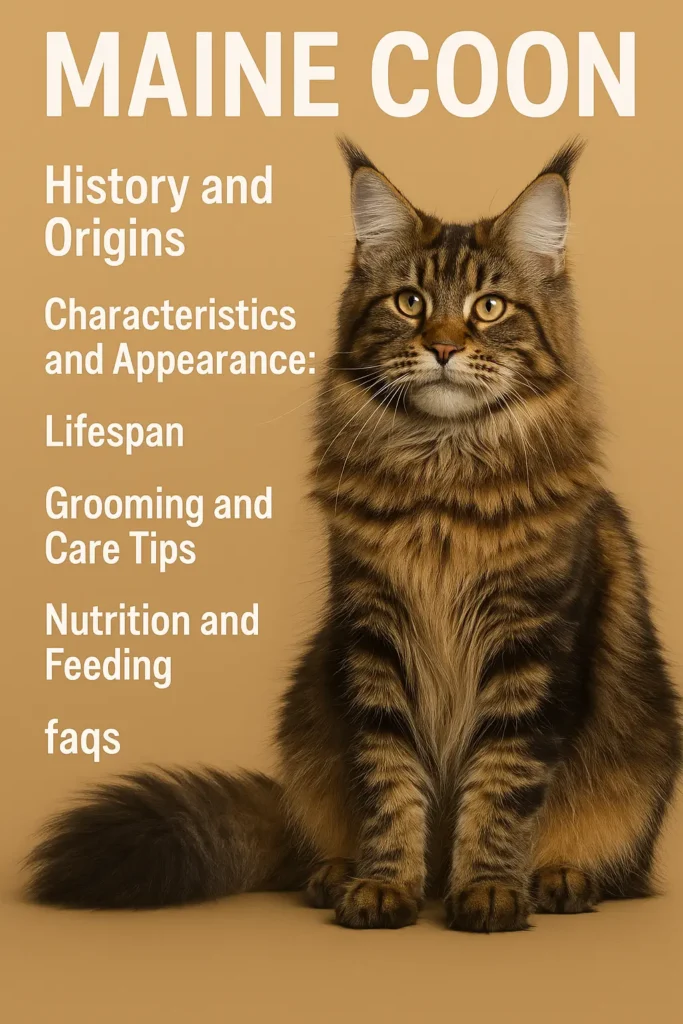
In this comprehensive guide, we’ll explore everything you need to know about Maine Coon cats, from their fascinating history and unique physical features to practical care tips and health advice. Whether you’re a seasoned cat owner or considering your first Maine Coon, this article is a complete resource for all things about Maine Coon.
Maine Coon History and Origins
The exact origins of the Maine Coon remain shrouded in mystery and folklore. Several theories explain how these cats came to be:
Working Cats of New England:
Many believe that Maine Coons evolved naturally as working cats on farms in the state of Maine. They were prized for their hunting skills, especially for catching rodents in harsh winter conditions.
Folk Legends and Myths:
Some popular legends suggest that Maine Coons are the result of crossbreeding between domestic cats and raccoons, or that they descend from long-haired cats sent by European royalty like Marie Antoinette. Although these stories add charm, they are not scientifically supported.
Natural Selection:
The prevailing theory is that Maine Coons developed from the interbreeding of local short-haired cats and long-haired cats brought over by seafarers and immigrants. Their robust features and thick coats are adaptations to the severe New England winters.
Once a common sight on American farms, the Maine Coon almost disappeared during the early 20th century with the rise in popularity of other breeds. Dedicated breeders and cat enthusiasts eventually revived the breed.
In 1975, the Cat Fanciers’ Association (CFA) granted the Maine Coon provisional status, and by 1976 they achieved championship status. In 1985, Maine even declared the Maine Coon as its official state cat, a title that cements its cultural significance in America.
Characteristics and Appearance:
Maine Coon cats are renowned for their impressive size, distinctive physical features, and amiable personalities. Here’s an in-depth look at their characteristics:
Size and Weight
Males: Typically weigh between 15 to 25 pounds (6.8 to 11.3 kilograms) and can reach heights up to 16 inches (40.6 centimeters).
Females: Generally lighter, weighing between 10 to 15 pounds (4.5 to 6.8 kilograms)
Both sexes can measure up to 40 inches (101.6 centimeters) in length, including the tail.
Physical Attributes:
Coat: Long, thick, and shaggy with a water-resistant topcoat over a softer undercoat. This dense fur helps them withstand cold climates.
Colors: Maine Coons come in a variety of 64 different colors and patterns, including solid (white, black, blue, red, cream), tabby, bi-color, parti-color, shaded, and smoke.
Ears: Large, wide-set ears often adorned with lynx-like tufts at the tips, contributing to their wild and captivating appearance.
Eyes: Large, expressive eyes that can be green, gold, green-gold, copper, blue, or odd-eyed, depending on their coat color.
Tail: Long, bushy tails that they often wrap around themselves for warmth.
Personality Traits
Maine Coons General Temperament are friendly, affectionate, and sociable. They often exhibit dog-like behaviors, such as following their owners around and being receptive to training.
Males Tend to be more outgoing, playful, and attention-seeking. They are often described as the “class clowns” of the cat world, bringing endless entertainment with their antics.
Females are Generally more reserved and independent but still affectionate. They may be less socially inclined than males but are equally playful and intelligent.
While generally friendly and adaptable, some Maine Coons may exhibit negative traits:
Males, in particular, can be demanding of attention, which might be overwhelming for some owners. Due to their large size, they are prone to hip dysplasia, a condition that can lead to arthritis or lameness. Regular veterinary check-ups are essential to monitor and manage such conditions.
Identifying Features
Size: As one of the largest domestic cat breeds, their substantial size is a distinguishing factor.
Fur: Their long, shaggy, and water-resistant coat sets them apart from other breeds.
Ears and Tail: The lynx-like ear tufts and bushy tail are signature features of the Maine Coon.
Lifespan
Maine Coon cats are known for their robust health and relatively long lifespans compared to some other breeds. On average, they live between 12 to 15 years, though with proper care, some have been known to reach their late teens or even early twenties.
Grooming and Care Tips
Despite their long, luxurious coat, Maine Coons are relatively low-maintenance when it comes to Maine Coons grooming:
- Brushing: Brush your Maine Coon at least twice a week to prevent matting and reduce shedding. During shedding season, more frequent brushing may be necessary.
- Bathing: Their water-resistant coat usually doesn’t require frequent bathing. Spot cleaning or occasional baths are sufficient.
- Nail Trimming and Dental Care: Regular nail trims and teeth brushing help maintain overall hygiene and prevent health issues.
Nutrition and Feeding
A balanced Maine Coons diet is critical to maintaining the health. If you have Maine Coon then you should use Maine Coon food calculator if you are concerned about your cat.
- High-Protein Diet: As obligate carnivores, Maine Coons thrive on a diet rich in animal proteins. Look for high-quality cat food that supports their active lifestyle.
- Portion Control: Given their tendency to become overweight, monitor their food intake carefully. Consult your veterinarian to determine the right portion sizes.
- Hydration: Always provide fresh, clean water. Some cats enjoy running water, so consider a pet water fountain to encourage them to drink more.
FAQs
How much are Maine Coon cats?
Maine Coon cats typically cost between $800 and $2,500, depending on factors like pedigree, breeder reputation, and whether they are pet-quality or show-quality. Adoption from a shelter may be cheaper.
How big do Maine Coon cats get?
Maine Coons are one of the largest domestic cat breeds. They can grow up to 40 inches long (including tail) and weigh between 10–25 pounds. Males tend to be larger than females.
How long do Maine Coon cats live?
Their lifespan is usually 12–15 years, but some can live up to 20 years with good care.
Do Maine Coon kittens hunt rats in the house?
Yes! Maine Coons are natural hunters and were originally bred for pest control. Even as kittens, depends on their age and experience due to their strong hunting instincts, they will chase mice and rats though their effectiveness.