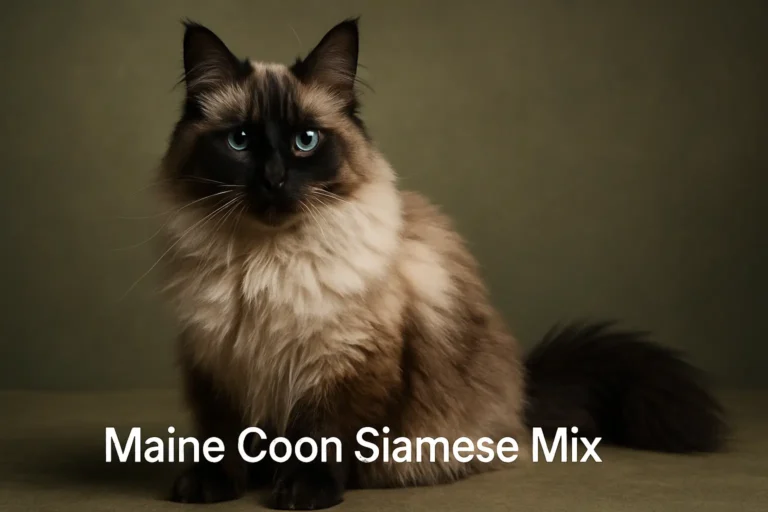
Maine Coon vs Ragdoll: Which Gentle Giant Actually Fits Your Home?
The two gentle giants of the cat world, and the most common final-two shortlist in all of cat shopping. Both are huge, fluffy, famously sweet, and great with kids — which is exactly why people agonize over the choice. The differences are real, though, and they come down to one question about you, not the cats.
Quick Answer
Choose a Ragdoll if you want the ultimate lap cat — calm, quiet, floppy, and physically affectionate. Choose a Maine Coon if you want a more curious, interactive companion — smarter on paper, more playful, more dog-like, chattier, and happier beside you than on you. The Maine Coon is bigger and needs more grooming; the Ragdoll is quieter and often lives into its 20s.
Maine Coon vs Ragdoll at a Glance
| Maine Coon | Ragdoll | |
|---|---|---|
| Male weight | 15–25 lbs | Up to 20 lbs |
| Female weight | 8–15 lbs | 10–15 lbs |
| Build | Long, tall, rectangular, muscular | Stockier, softer lines |
| Coat | Thick, water-resistant double coat | Soft, silky, single-layer |
| Colors | 80+ colors and patterns | Pointed (dark face/ears/tail), always blue eyes |
| Personality | Curious, playful, dog-like, active | Docile, mellow, goes limp when held |
| Lap cat? | Usually not — prefers sitting beside you | Emphatically yes |
| Vocality | Chatty — chirps and trills | Quiet |
| Grooming | 3–4× weekly brushing | Less prone to matting, easier upkeep |
| Lifespan | 12–15 years | Often well into the 20s |
| Price (pet, 2026) | $1,500–$3,000 | $1,000–$2,500 |
Size and Looks: The Wild One vs the Soft One
The Maine Coon is the larger animal — longer, taller, heavier-boned, holding the record books for length (see our size guide). Everything about it says “wilderness”: tufted lynx ears, snowshoe paws, shaggy uneven coat, a tail like a raccoon’s. It also takes 3–5 years to finish growing.
The Ragdoll is a big cat wearing a formal suit: rounded lines, plush silky fur, and the signature combination — colorpoint markings with blue eyes, always. Where Maine Coons come in 80+ colors, every Ragdoll is a pointed cat. If a black or orange coat matters to you, the choice just made itself.
Personality: Sidekick vs Soulmate
This is the real decision point. The Maine Coon is a participant. It follows you room to room, supervises your cooking, plays fetch, learns tricks, opens cabinets it shouldn’t, comments on everything in chirps. It’s affectionate in a companionable, slightly independent way — pressed against your leg, not draped across your lap (full breakdown in our personality guide).
The Ragdoll is a presence. Bred explicitly for docility, it does the thing the name promises: relaxes completely when picked up. Ragdolls want to be held, carried, and settled on laps for hours, and are generally the quieter, less exploratory of the two.
A useful self-test: does “a cat that follows me around and plays fetch but won’t sit on me” sound perfect or disappointing? Your answer is your breed.
Grooming and Shedding
The Ragdoll wins on maintenance. Its single-layer silky coat mats less and sheds less; two or three brushing sessions a week keeps it pristine. The Maine Coon’s dense double coat needs three to four weekly sessions, daily during spring and fall coat blow, and mats punish neglect (our grooming guide and shedding guide cover the routine). Neither breed is hypoallergenic, for the record.
Health and Lifespan
Both breeds share the big feline heart risk — hypertrophic cardiomyopathy (HCM) — so parent heart screening matters whichever you choose. Maine Coons add hip dysplasia and SMA to the watch list (details here); Ragdolls add a tendency toward urinary issues and, being less active, obesity. Lifespan tilts firmly Ragdoll: often well into the 20s, versus the Maine Coon’s typical 12–15 years.
Families, Other Pets, and Living Situations
Honestly, both breeds ace this — it’s why they’re the two default family cats. Both tolerate kids with saintly patience and integrate well with dogs. At the margin: the Maine Coon copes better with busy, chaotic households and wants more active play; the Ragdoll suits calmer homes and apartments slightly better, and its floor-bound, trusting nature makes it strictly an indoor cat. Can you have both? Yes — it’s a popular combination, and the temperaments mesh well.
Price
Comparable, with the Maine Coon running slightly higher on average in 2026: $1,500–$3,000 pet-quality versus $1,000–$2,500 for Ragdolls, with show lines of both climbing past $4,000. Ongoing costs favor the Ragdoll marginally — smaller portions, less grooming gear. Full numbers in our price guide.
Frequently Asked Questions
Which is bigger, a Maine Coon or a Ragdoll?
The Maine Coon — males can reach 25 pounds and 40 inches long versus the Ragdoll’s typical 20-pound ceiling. Ragdolls are stockier; Maine Coons are longer and taller.
Which is friendlier?
Both are exceptionally friendly in different styles: Ragdolls are more physically cuddly and placid; Maine Coons are more interactive, playful, and communicative.
Which is the better lap cat?
The Ragdoll, decisively — it was practically designed for laps and goes limp when held. Most Maine Coons prefer sitting next to you.
Which sheds more?
The Maine Coon — its double coat sheds year-round with heavy seasonal blows, while the Ragdoll’s single coat sheds and mats noticeably less.
Which lives longer?
Ragdolls on average, often well into their 20s, versus 12–15 years for Maine Coons. Both benefit hugely from HCM-screened parents and weight control.
Can Maine Coons and Ragdolls live together?
Very well — both are easygoing, non-territorial breeds, and the pairing is popular. Standard slow introductions apply.