Black Maine Coon: How Rare They Really Are, Price, and Why They Turn Brown
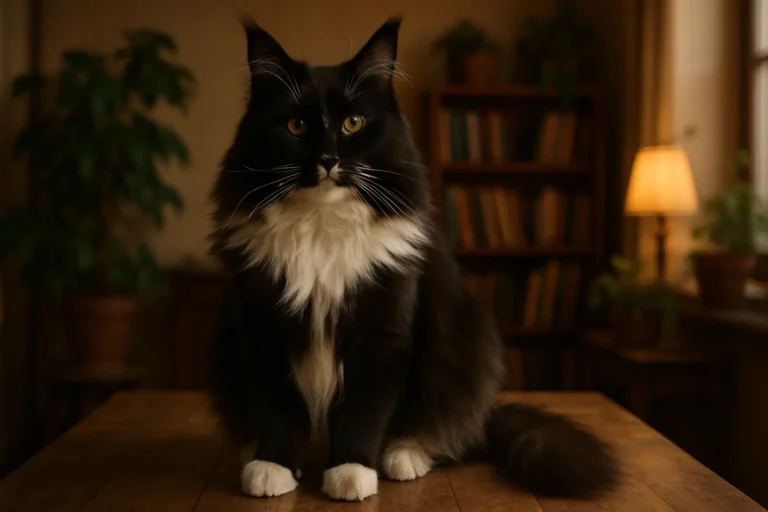
A solid black Maine Coon in full winter coat is about as close as domestic cats get to a small panther — the glowing gold eyes, the black mane, the sheer size. Social media has noticed, and this is now one of the most requested colors a breeder hears about, which has quietly warped how “rare” people assume it is.
Quick Answer
Black is a fully recognized, standard Maine Coon color — it has always been part of the breed, and it is not genetically rare. What’s changed is demand: viral photos have made black (and especially black smoke) two of the most-requested colors, so waiting lists run long even though breeders can produce the color reliably. Expect prices in the breed’s normal range, occasionally a modest premium purely because of popularity.
Can Maine Coons Be Black?
| Variety | What You See |
|---|---|
| Solid black | Jet black from root to tip — the panther look |
| Black smoke | Black over a pale silver undercoat that flashes when the cat moves |
| Black tabby (brown tabby) | Black-based coat with visible brown swirls or stripes — the breed’s iconic pattern |
| Black and white | Black with white markings, from a chest locket to a full tuxedo |
| Black tortie | Black mixed with red patches — almost always female |
The genetics are simple but strict: a solid black Maine Coon needs the black pigment gene plus two copies of the recessive non-agouti gene, which switches off the tabby pattern. One copy isn’t enough, which is why solid blacks are noticeably less common than black-based tabbies. Many black kittens also show faint “ghost stripes” that fade as the adult coat darkens. See where black sits in the breed’s full 80+ color system in our complete colors guide.
Are Black Maine Coons Actually Rare?
Here’s the honest version most listings skip: black has always been a standard, recognized Maine Coon color, and it isn’t genetically scarce the way, say, a male tortoiseshell is. What makes it feel rare is pure demand — the striking, high-contrast look photographs beautifully, it’s become an internet favorite, and litters with black kittens get reserved fastest. Availability, in other words, depends on breeder timing far more than genetic rarity. A cattery charging a huge “rare black” premium is charging for popularity, not biology.
Why Is My Black Maine Coon Turning Brown?
The famous “rusting” — and it surprises almost every first-time black-cat owner. Three causes, in order of likelihood. Sunbathing: UV light bleaches black pigment to reddish-brown, exactly like human hair in summer; dedicated windowsill loungers rust the most, and the fresh coat grows back black. Diet: black pigment production consumes the amino acid tyrosine, and a cat on food that’s short of it will visibly redden — quality high-protein food fixes it (see our diet guide). Rarely, health issues — thyroid, liver, or kidney problems can shift coat color, so a rusty coat paired with weight loss or behavior changes is worth a vet visit.
What Color Eyes Do Black Maine Coons Have?
Green, gold, or copper — the contrast against black fur is a huge part of the appeal. Blue eyes essentially don’t occur in solid black Maine Coons, since blue is tied to white or high-white coats (with the rare exception of the breed’s own Dominant Blue Eye trait). A “black kitten with blue eyes” in an ad is either too young for its true eye color to have settled, or a red flag worth asking about. Adult eye color locks in around four to six months.
Black Maine Coon Personality
Identical to every other Maine Coon, because coat color doesn’t touch temperament: sociable, dog-like, patient with kids, chatty in chirps and trills, happier beside your lap than on it. The black-cat superstition business is pure folklore — and it cuts both ways, since black cats are considered good luck across much of Japan, Scotland, and maritime tradition. The full temperament rundown is in our personality guide. One sadly real note: black cats of every breed statistically wait longer in shelters, so a black Maine Coon mix is one of the best value-for-love deals in the cat world if you’re open to adoption.
How Much Does a Black Maine Coon Cost?
From reputable, health-testing breeders in 2026: solid-color kittens (including black) typically run $2,500–$3,000, in line with the breed’s standard pet-quality range, with high-profile catteries charging $4,000–$8,000 for black or black smoke kittens from championship lines. Some breeders price all colors identically on principle; others add a premium to black and smoke because those kittens reserve first. Everything that actually justifies a higher price — health testing, pedigree, rearing — is covered in our price guide.
Caring for a Black Maine Coon
Standard Maine Coon care applies — brushing several times a week, a high-protein diet, and awareness of the breed’s genetic health risks like HCM and hip dysplasia (see the health guide). Two black-specific notes: sun-loving cats will rust in summer (harmless), and dander shows more against dark fur, so regular brushing doubles as a cosmetic fix. Size-wise they’re ordinary Maine Coons — which is to say enormous; see our size guide.
Frequently Asked Questions
Are black Maine Coons rare?
Not genetically — black has always been a standard recognized color in the breed. It feels rare because demand currently outpaces how quickly breeders can produce and reserve litters, not because of scarce genetics.
How much is a black Maine Coon kitten?
Typically $2,500–$3,000 from an ethical breeder, up to $4,000–$8,000 at prominent catteries. Be wary of extreme “rare black” price premiums — the genetics don’t support them.
What's the difference between black and black smoke?
A solid black is black to the root of every hair. A black smoke has a pale silver undercoat — hidden at rest, flashing dramatically in motion. Smoke kittens often look solid at first and reveal the effect as they mature.
Why does my black Maine Coon look brown in sunlight?
Sun bleaching (harmless) or a diet low in tyrosine (fixable with better food). Faint ghost tabby stripes visible in bright light are also normal in young solid blacks.
Can black Maine Coons have blue eyes?
Almost never through the usual route — blue eyes occur with white or mostly-white coats. The breed’s rare Dominant Blue Eye (DBE) trait is the one exception that can occasionally put blue eyes on a non-white cat.
Are black Maine Coons more aggressive?
Not remotely. Color has no effect on temperament, and the Maine Coon is among the gentlest breeds there is. The superstition deserves retirement.