Neutering or Spaying a Maine Coon: Timing, Cost, and What Changes After
Standard vet advice says fix your cat by 5 months old. Then you look at your Maine Coon kitten, who won’t finish growing until age 3 or 4, and wonder if “standard” advice even applies. It’s a fair question, and most articles answering it are written by breeders, split across two separate 6,000+ word pages for males and females, and never mention what any of this actually costs. Here’s one unified answer, covering both sexes, with real numbers.
Quick Answer
Most veterinary guidelines recommend spaying or neutering cats by 5 months old. Because Maine Coons grow until age 3–4, many vets extend this to 5–9 months to support fuller development, without added health risk. Spaying before a female’s first heat cuts mammary cancer risk by up to 91%. Cost typically runs $150–$600 depending on region and sex.
Why Maine Coon Timing Advice Differs From “Standard” Cat Advice
Major veterinary organizations — including AAHA and AVMA — endorse spaying or neutering cats not intended for breeding by 5 months of age, an initiative often referred to as “Fix by Five.” Almost no Maine Coon-specific article names this guideline directly, despite it being the actual baseline every vet is working from.
The complication: Maine Coons don’t reach full physical maturity until 3–4 years old, one of the slowest maturation timelines of any cat breed. That gap is exactly why many vets recommend extending the standard 5-month window somewhat — commonly to 5–9 months — for this specific breed, without abandoning early sterilization’s real benefits altogether.
Recommended Age Windows — Male vs. Female, Side by Side
| Sex | Common Recommendation | Why |
|---|---|---|
| Male (neuter) | 5–9 months | Standard 5-month AAHA/AVMA baseline, often extended slightly for this slow-maturing breed at vet discretion |
| Female (spay) | 5 months, ideally before first heat | Timing before the first heat cycle carries the strongest cancer-prevention benefit — the case for waiting is weaker on the female side |
Notice the asymmetry: the case for extending past 5 months is stronger for males (lower urgency, no cancer-prevention clock running) than for females, where the cancer-prevention benefit of spaying before the first heat is one of the best-documented outcomes in this entire topic.
The Growth Question: Does It Stunt or Change a Maine Coon’s Size?
Growth plates — the cartilage areas near the ends of long bones where growth happens — close and harden once a cat matures. Removing reproductive hormones can modestly delay that closure, which is the actual mechanism behind the popular “early fixing stunts growth” claim.
Here’s what current research actually shows once you follow that mechanism through: delayed growth-plate closure in cats doesn’t mean a smaller adult — if anything, the effect trends the opposite direction some owners fear, since a longer growth window can mean marginally taller or longer bone structure, not stunted size. Much of the “wait longer for large breeds” advice circulating online is actually extrapolated from large-breed dog studies, where orthopedic disease risk genuinely is better documented — that research doesn’t directly transfer to cats, and current feline-specific evidence shows no meaningful difference in major complication rates between cats fixed before versus after 5 months.
The Health Case for Earlier Fixing
Females: mammary cancer risk, by the actual numbers. A real, citable, named study — University of Pennsylvania, 2005, a case-control study on ovariohysterectomy and feline mammary carcinoma (PubMed ID 16095174) — found the following risk reduction by spay age, numbers that almost no Maine Coon-specific article actually cites:
| Age at Spay | Mammary Cancer Risk Reduction |
|---|---|
| Before 6 months | 91% reduction |
| Before 1 year | 86% reduction |
| Between 1–2 years | Only 11% reduction |
| After age 2 | No protective effect |
Feline mammary tumors are also 80–90% malignant in reported case series — a notably higher malignancy rate than in dogs, which makes this prevention window particularly meaningful.
Pyometra — a life-threatening uterine infection that develops after repeated heat cycles in intact females — is the risk most articles underweight relative to cancer. It’s completely eliminated by spaying and deserves equal billing with cancer prevention, not a footnote.
Males: testicular cancer and related risks. Neutering eliminates testicular cancer risk entirely and reduces prostate and perianal disease risk — lower-stakes than the female cancer numbers above, but real.
Health Considerations That Argue for Waiting Slightly Longer
The case for extending timing on the male side is more about surgical planning than disease prevention. Larger-breed cats like Maine Coons sometimes benefit from pre-anesthetic bloodwork as a routine precaution, particularly past 6 months, and a somewhat longer anesthesia/surgery window given greater body mass — not because the procedure itself is riskier for this breed, just because more careful planning is reasonable for a bigger patient. Current veterinary literature does not show increased orthopedic disease or major complication rates tied specifically to early sterilization timing in cats.
Does Timing Affect HCM Risk?
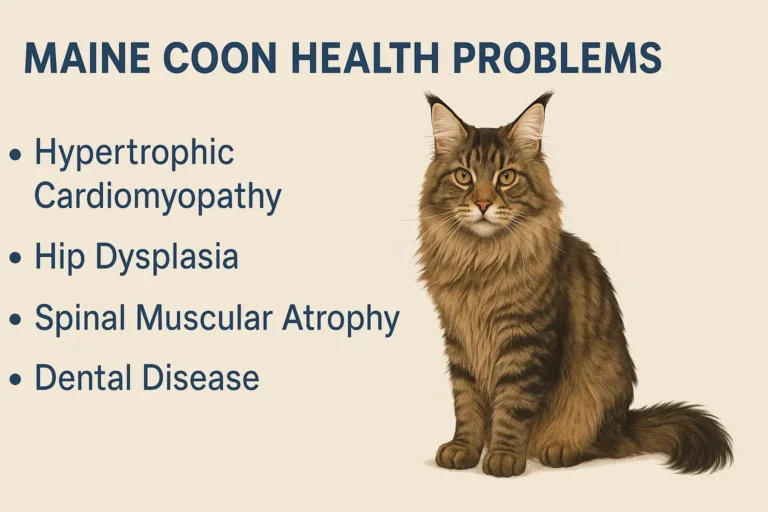
No — and this reassurance is worth stating plainly, since HCM anxiety runs high in Maine Coon ownership. Hypertrophic cardiomyopathy is driven by inherited MYBPC3 gene mutations, entirely independent of spay/neuter timing or hormone exposure. Pre-anesthetic cardiac screening is a reasonable precaution for this breed specifically because of its known HCM predisposition — not because the surgery itself carries cardiac risk. See our full HCM guide for the genetics.
What It Costs in 2026 — Real Numbers
No currently ranking Maine Coon-specific article has real cost data — every source covering price is generic, breed-agnostic pet-cost content. Here’s what actually drives the number, and realistic 2026 ranges:
| Option | Typical Cost | Notes |
|---|---|---|
| Neuter (male), private clinic | $150–$400 | West Coast averages ~$245–$305; East Coast ~$497–$580 |
| Spay (female), private clinic | $350–$600+ | Consistently costs more than neutering — abdominal surgery vs. a simpler scrotal incision |
| Low-cost / nonprofit clinics | $25–$100 | Widely available; income or subsidy-based pricing varies by location |
| Mobile clinics | $85–$100 average | A middle-ground option between full-price private clinics and low-cost programs |
There isn’t a separate “Maine Coon price tier” at most clinics — you’re really paying “large adult cat” pricing, which can include optional pre-anesthetic bloodwork as an add-on given the breed’s size. That’s a reasoned inference from general veterinary pricing structure, not a published breed-specific pricing study, since none currently exists.
What Changes After Surgery
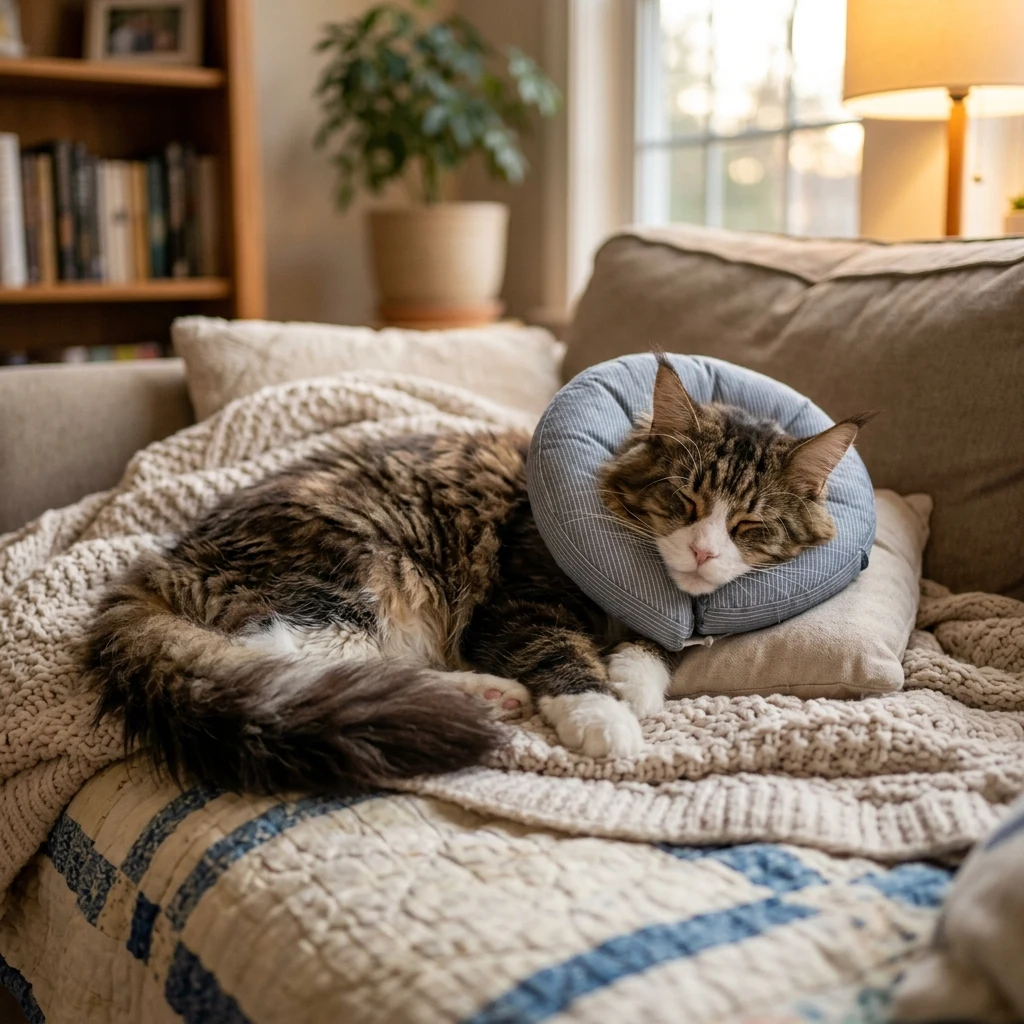
Recovery. Males typically need minimal aftercare — often no visible sutures, roughly 7–10 days of activity restriction, and an e-collar. Females have a genuine abdominal incision (roughly 1–2 inches), also with 7–10 days of restricted activity and an e-collar or surgical suit; most cats are nearly fully recovered by the two-week mark, with normal eating resuming within 12–24 hours post-op for both sexes.
Behavior. Reduced spraying/marking, reduced roaming, reduced fighting/aggression in males, and elimination of heat-cycle vocalizing and restlessness in females are all well-documented. Core personality does not change — a common myth worth dispelling directly.
Metabolism and weight. Spaying/neutering reduces basal metabolic rate by roughly 20–30%, often without a corresponding drop in appetite — the actual mechanism behind widely reported post-fix weight gain. For a large, athletic breed already prone to weight gain if overfed, adjusting portions after surgery (not just relying on the same pre-surgery amount) genuinely matters; our food calculator can help recalculate.
Talking to Your Vet: A Simple Decision Framework
Ask directly: given my cat’s current age, size, and health, do you recommend the standard 5-month timing or a modest extension given the breed? Ask whether pre-anesthetic bloodwork is recommended for a cat this size. If you’re working with a breeder contract specifying a required age, confirm it aligns with what your own vet independently recommends rather than treating either source as automatically final — a good vet welcomes this specific conversation rather than defaulting to a one-size-fits-all answer.
Frequently Asked Questions
What is the best age to neuter or spay a Maine Coon?
Standard veterinary guidance (AAHA/AVMA) recommends by 5 months for cats generally. Many vets extend this to 5–9 months for Maine Coons specifically, given their slower growth, without meaningful added health risk.
Does neutering or spaying stunt a Maine Coon’s growth?
No — current feline research shows no evidence of stunted or disproportionate growth. If anything, early sterilization tends to modestly delay growth-plate closure, which trends toward slightly taller/longer bone structure, not smaller size.
How much does it cost to neuter or spay a Maine Coon?
Private clinics typically charge $150–$400 for neutering and $350–$600+ for spaying, varying by region. Low-cost and nonprofit clinics often charge $25–$100. There’s no separate breed-specific pricing tier — it’s standard large-cat pricing.
Should you wait to spay a Maine Coon because they grow slowly?
Waiting slightly (to 5–9 months) is reasonable and commonly recommended, but waiting significantly longer weakens the strongest health benefit of early spaying — mammary cancer risk reduction drops from 91% (before 6 months) to just 11% (spayed between 1–2 years).
Does neutering affect hypertrophic cardiomyopathy (HCM) risk in Maine Coons?
No. HCM is driven by inherited MYBPC3 gene mutations, unrelated to spay/neuter timing. Pre-anesthetic cardiac screening is recommended for this breed because of its known HCM predisposition, not because surgery itself increases cardiac risk.
What is pyometra, and does spaying prevent it?
Pyometra is a life-threatening uterine infection that can develop in intact females after repeated heat cycles. Spaying eliminates the risk entirely, since the uterus is removed during the procedure.