Silver Maine Coon: Silver, Shaded, and Chinchilla Explained
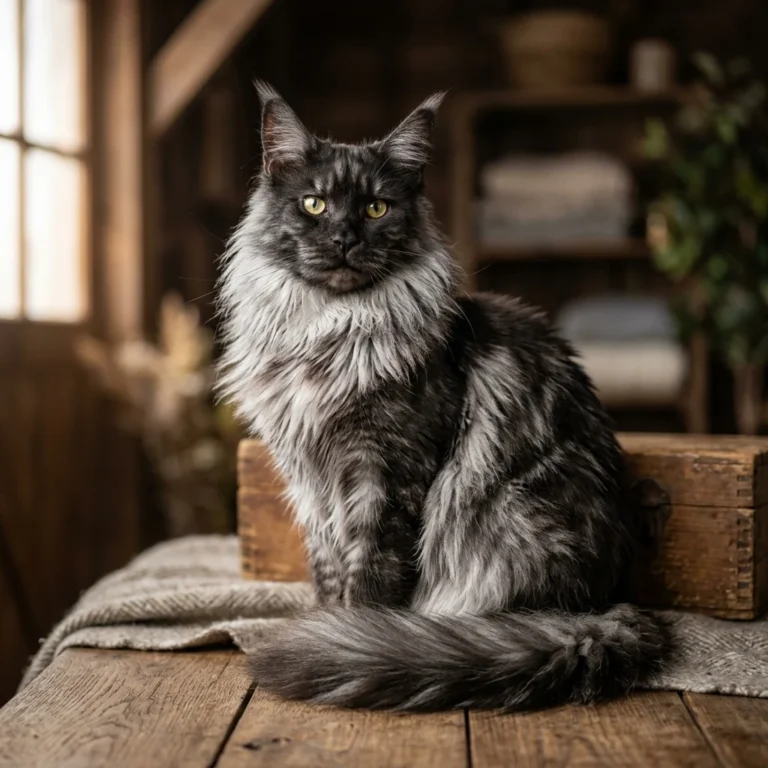
Silver is the color that makes people stop scrolling. A silver Maine Coon under good light looks lit from within — cool grey-white fur with dark markings floating on top, green eyes cutting through the whole effect like something out of a fantasy poster. It also confuses almost everyone shopping for a kitten, because “silver” covers at least six genuinely different looks.
Quick Answer
A silver Maine Coon is a tabby cat carrying the inhibitor gene, which bleaches the warm background color and leaves cool white or near-white roots under darker tipped hairs. How much of each hair gets colored determines the specific look — from a full silver tabby pattern down to an almost-white chinchilla. Pet-quality kittens in 2026 run $2,000–$4,000, with shaded and chinchilla varieties pushing toward $6,000–$8,500 at specialist catteries.
What Actually Makes a Coat Silver
Silver comes from the same inhibitor gene behind smoke coats — the difference is what it’s applied to. Smoke sits on a solid cat and hides the base color entirely at rest. Silver sits on a tabby cat, so the pattern — stripes, swirls, or ticking — stays visible, just rendered in cool grey instead of warm brown.
How light or dark the silver reads depends on two more genes working alongside the inhibitor: a wide-band gene and a modifier gene that control how much of each hair shaft actually carries color. Full tipping gives a classic silver tabby. Partial tipping, limited to roughly the top third of the hair, gives shaded silver. Barely-there tipping, just the last eighth of the hair, gives chinchilla — a coat so pale it can look almost white from across a room.
The Silver Family, Explained
| Variety | What You See |
|---|---|
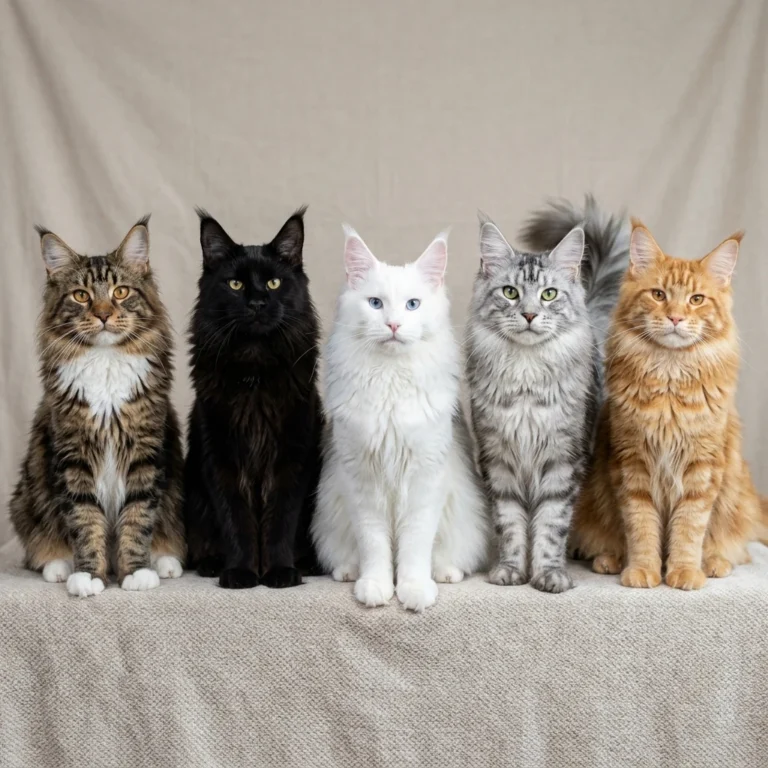
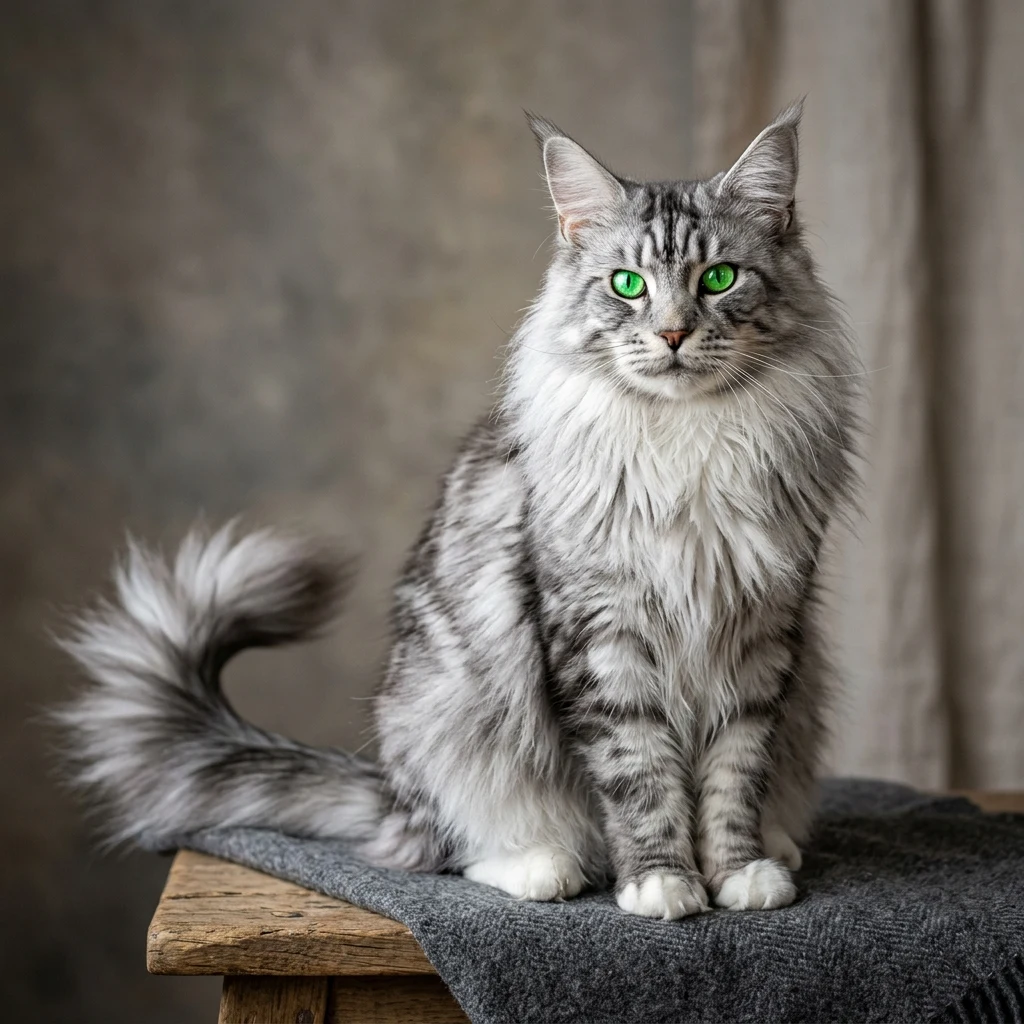
| Black silver tabby | The classic version — full tabby pattern in charcoal-black over a silver-white base |
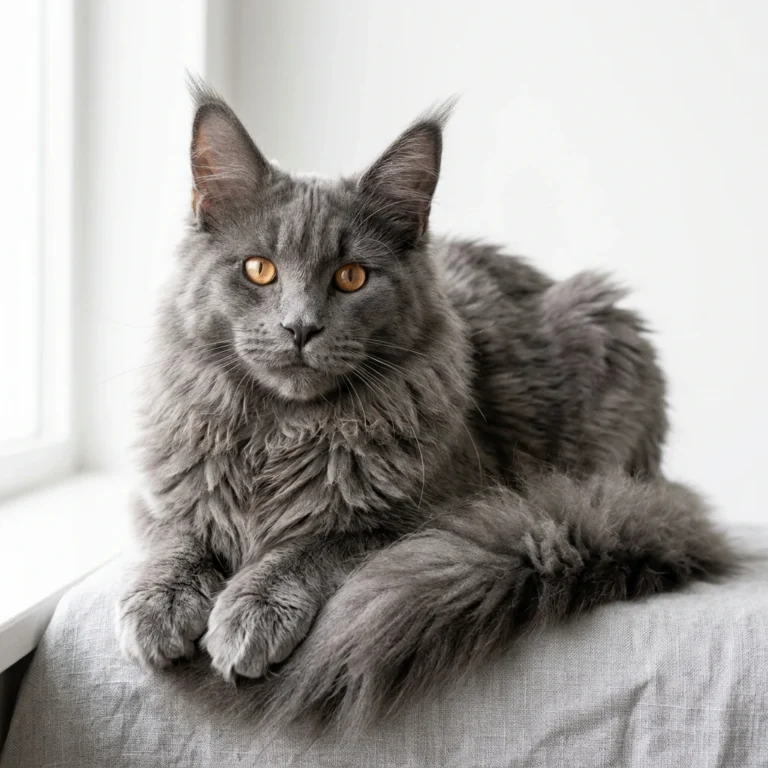
| Blue silver tabby | Same pattern in soft blue-grey, an even more washed-out, ethereal effect |
| Red silver (cameo) | Orange tabby pattern over silver — uncommon and highly requested |
| Silver shaded | Tipping on roughly the top third of the hair; pattern fades, glow increases |
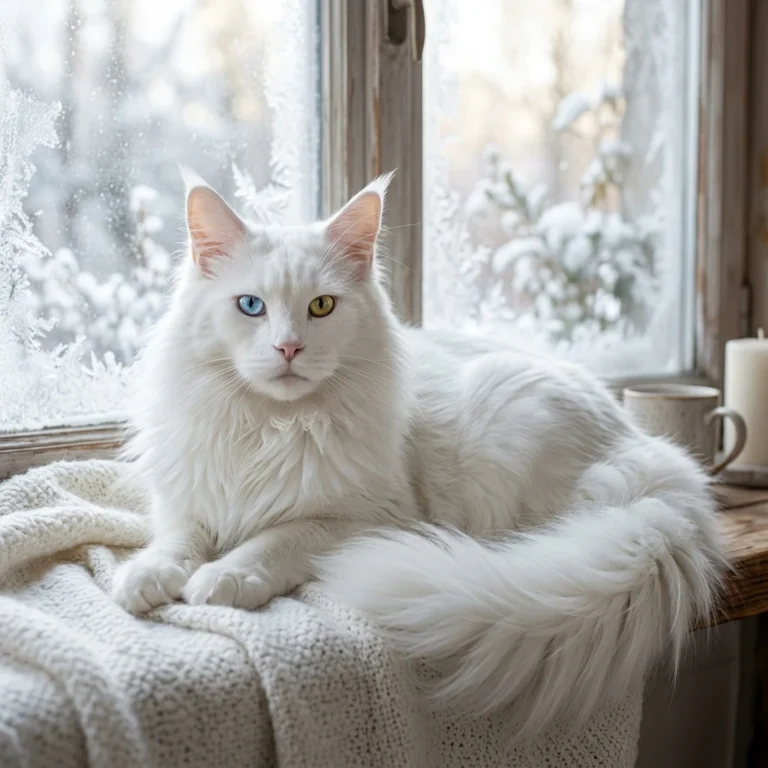
| Chinchilla silver | Tipping on just the hair tips; the palest, most delicate silver look |
| Silver torbie / smoke tortie | Silver combined with tortoiseshell patching — almost always female |
Black silver tabby is the most recognizable and most common of the group. Chinchilla and blue silver sit at the rare end — see the full 80-plus color system in our Maine Coon colors guide, and how solid smoke differs from patterned silver in our smoke Maine Coon guide.
Eye Color in Silver Maine Coons
Green is the classic pairing, and it’s the eye color breeders and judges prize most in this color family — the cool tones read as especially striking against silver fur. Gold and copper occur too. Blue eyes are unusual on a silver Maine Coon and generally only show up alongside significant white markings, the same rule that applies across the breed.
Silver Kittens Change a Lot
More than almost any other color family. Silver kittens are frequently born looking darker and more ordinary-tabby than they’ll end up, and the true silver base doesn’t fully emerge until somewhere between six and twelve months. A kitten that looks like a standard brown tabby at ten weeks can turn into a striking silver adult — which is exactly why reputable breeders won’t promise an exact adult look from a young kitten’s coat alone.
How Rare Is a Silver Maine Coon?
Less common than a classic brown tabby, but not a unicorn. Standard black silver tabby shows up reliably in litters from breeders who carry the gene. The rare end of the family — shaded, chinchilla, and blue silver — is genuinely harder to find, because it takes the inhibitor gene plus the right combination of wide-band and modifier genes lining up together.
Silver Maine Coon Price
| Type | Typical Price |
|---|---|
| Black silver tabby, pet quality | $2,000–$4,000 |
| Silver shaded or chinchilla | $4,000–$6,000 |
| Show or breeder quality, top lines | $6,000–$8,500 |
Some breeders don’t charge a color premium at all and price every kitten in a litter the same. Others price shaded and chinchilla noticeably higher because so few litters produce them cleanly. Either approach can be legitimate — what should stay constant is the health-testing checklist covered in our price guide.
Personality and Care
Standard Maine Coon temperament applies — the silver gene changes fur, not behavior. Expect the usual sociable, dog-like companion covered in our personality guide. Grooming is where this color earns its keep: a matted or dull coat flattens the exact contrast that makes silver worth having, so keep to the standard 2–4× weekly brushing in our grooming guide, and feed a high-protein diet that keeps the coat’s shine and contrast sharp.
Frequently Asked Questions
What is a silver Maine Coon?
A tabby-patterned Maine Coon carrying the inhibitor gene, which bleaches the warm background color to cool white or near-white while the darker tabby markings stay visible on top.
What’s the difference between silver, shaded, and chinchilla Maine Coons?
All three come from the same genes; the difference is how much of each hair is tipped with color. Silver has full tipping, shaded has tipping on about the top third, and chinchilla has color on just the very tip.
How much is a silver Maine Coon kitten?
Typically $2,000–$4,000 for a standard black silver tabby from a reputable breeder, rising to $4,000–$8,500 for shaded, chinchilla, or show-quality lines.
Are silver Maine Coons rare?
Standard black silver tabby is uncommon but findable. Shaded and chinchilla silver, and blue silver specifically, are genuinely rare because they need several genes to line up together.
Do silver Maine Coon kittens change color?
Yes, more than most colors. Kittens often look darker and more ordinary at birth, with the true silver base developing over six to twelve months.
What eye color do silver Maine Coons have?
Usually green or gold, with green considered especially prized against silver fur. Blue eyes are atypical unless paired with significant white markings.