How to Stop a Maine Coon Scratching Furniture
A Maine Coon doesn’t scratch your couch to spite you. It scratches because scratching is wired into what a cat physically needs to do, and a lot of the standard advice for “regular” cats simply doesn’t hold up against claws this size, on a frame this heavy, needing a stretch this long. Fix the setup for the actual cat you have, and the couch problem mostly solves itself.
Quick Answer
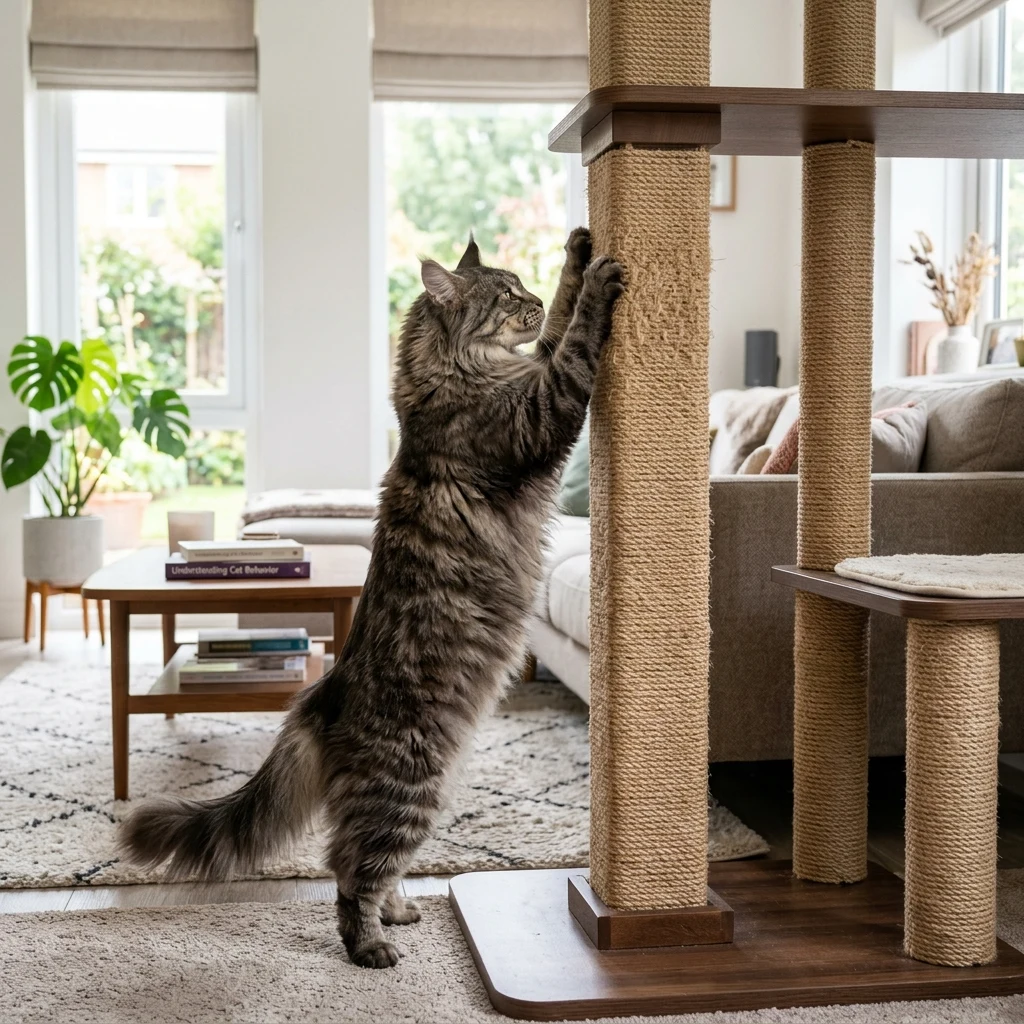
Stopping furniture scratching means redirecting, not eliminating, the behavior. Give a Maine Coon scratching posts that are tall enough for its full stretch (at least 32–36 inches), thick enough to feel sturdy under a 15–25-pound cat (6–8 inch posts), and placed where the cat already scratches. Pair that with regular nail trims and a mild deterrent on the furniture itself, and most cats redirect within a couple of weeks.
Why Scratching Happens at All
Scratching sheds the dead outer layer of the claw sheath, stretches the shoulders and spine in a way a cat can’t replicate any other way, and marks territory both visually and through scent glands in the paw. It’s not optional behavior and it’s not misbehavior — it’s closer to stretching after a nap. The goal was never to stop it. It’s to make sure the scratching lands on a post instead of your armchair.
Why Standard Scratching Posts Fail With This Breed
Most off-the-shelf scratching posts are sized for an 8–10 pound cat, and a Maine Coon at 15–25 pounds simply outgrows them. A post that’s too short means the cat can’t fully extend its spine mid-scratch, so it looks elsewhere for something bigger — usually the arm of a sofa. A post that wobbles or tips under a heavier cat teaches the cat that furniture is the safer, sturdier option, fast.
What to Actually Buy
- ✓Height: at least 32–36 inches, ideally taller, so the cat can stretch to full length — remember this breed can reach 40 inches nose to tail.
- ✓Post thickness: 6–8 inches in diameter. Thin posts flex and feel unstable under this much weight, which pushes cats back toward furniture.
- ✓Base stability: a wide, weighted base (roughly 24×24 inches on freestanding trees) so nothing tips during an enthusiastic scratch session.
- ✓Material variety: sisal rope or sisal fabric for most cats, but offer a cardboard scratcher and a wood option too — texture preference is individual.
- ✓Orientation options: most cats prefer vertical posts, but some strongly prefer horizontal scratchers; having one of each removes the guesswork.
Where to Put It
Placement beats persuasion. Put the first post directly next to whatever furniture the cat is already scratching — not across the room where it’s easy to ignore. Cats often scratch right after waking up, so a post near a favorite sleeping spot earns a lot of use. Once the habit shifts to the post, it can be gradually relocated a few inches at a time if it needs to move somewhere less central.
Making the Post the Better Choice
Scent it with catnip or silvervine to pull initial interest. Hang a toy near the top so the cat naturally stretches upward against it. Reward any use of the post — a treat, praise, a play session — in the moment, so the association forms quickly. On the furniture side, mild deterrents work without punishment: double-sided tape, aluminum foil, or a citrus-scented spray on the specific spots being targeted, removed once the new habit sticks. Never use punishment, yelling, or physical correction; it damages trust with a breed this socially attuned without actually stopping the behavior.
Nail Care and What Not to Do
Regular nail trims — every 2–3 weeks — blunt the damage even when a cat does scratch somewhere it shouldn’t. Soft vinyl nail caps are a legitimate temporary option for households with a serious furniture problem, reapplied every 4–6 weeks as claws grow. What’s not a reasonable answer: declawing. It’s not a nail trim — it’s amputation of the last bone in each toe, it’s been banned or restricted in a growing number of places for good reason, and it’s a particularly bad idea for a heavy-bodied breed that relies on healthy paws for balance and mobility throughout a long life.
Frequently Asked Questions
How do I stop my Maine Coon from scratching furniture?
Provide tall (32+ inch), thick (6–8 inch), stable scratching posts placed right where the cat already scratches, then reinforce use with treats and scent lures like catnip while applying a mild deterrent to the furniture itself.
Why does my Maine Coon scratch the couch instead of its post?
Usually because the post is too short, too thin, or too wobbly for a cat this size, or it’s positioned somewhere the cat doesn’t naturally pass by.
What size scratching post does a Maine Coon need?
At least 32–36 inches tall and 6–8 inches thick, on a wide, weighted base stable enough to handle a 15–25 pound cat scratching at full extension.
Should I get my Maine Coon declawed to stop scratching?
No. Declawing is amputation, not a nail trim, and it’s an especially poor choice for a large, heavy breed that depends on healthy paws for balance and mobility. Redirect the behavior instead.
How often should I trim a Maine Coon’s nails?
Roughly every 2–3 weeks. Regular trims reduce the damage even on the occasions a cat scratches somewhere it shouldn’t.
Do nail caps work for Maine Coons?
Yes, as a temporary measure. Soft vinyl caps blunt the claws and need reapplying roughly every 4–6 weeks as nails grow.