Blue Maine Coon: Why the “Grey” Cat Is Officially Called Blue
Nobody actually calls this cat grey until they find out that’s technically more accurate. Registries insist on “blue,” breeders insist on “blue,” the pedigree paperwork says “blue” — and yet the coat in front of you is unmistakably a soft, smoky slate grey. There’s a real reason for the mismatch, and it says a lot about how cat-color naming works in general.
Quick Answer
A “blue” Maine Coon is genetically a diluted black cat — the black pigment gets spread thinner along each hair, producing a soft slate-grey coat rather than true blue. It takes two copies of a recessive dilute gene, one from each parent, so blue shows up less often than standard black. Expect to pay $2,000–$6,000 for a registered, health-tested blue Maine Coon kitten in 2026.
Why “Blue” for a Cat That’s Clearly Grey
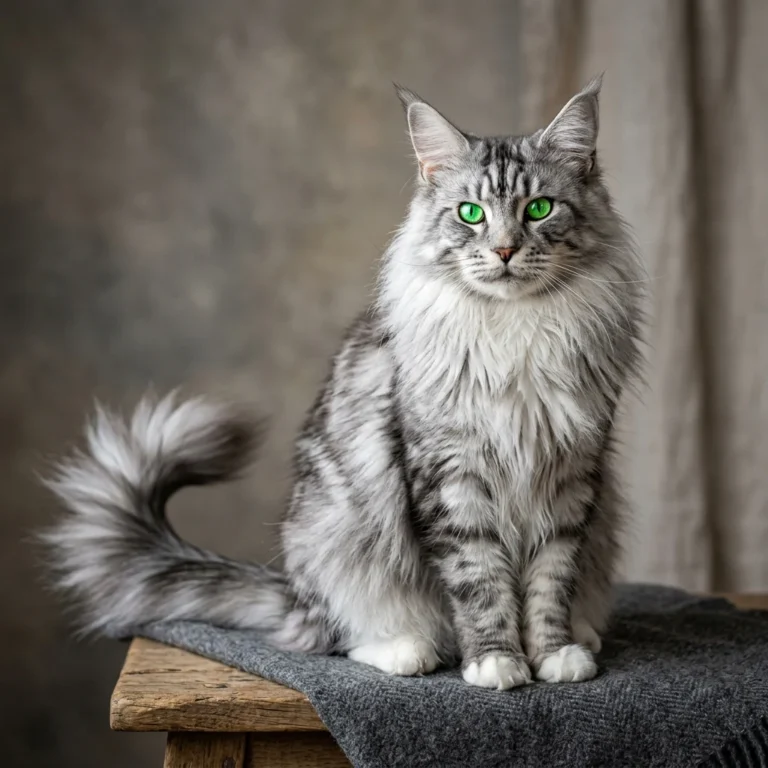
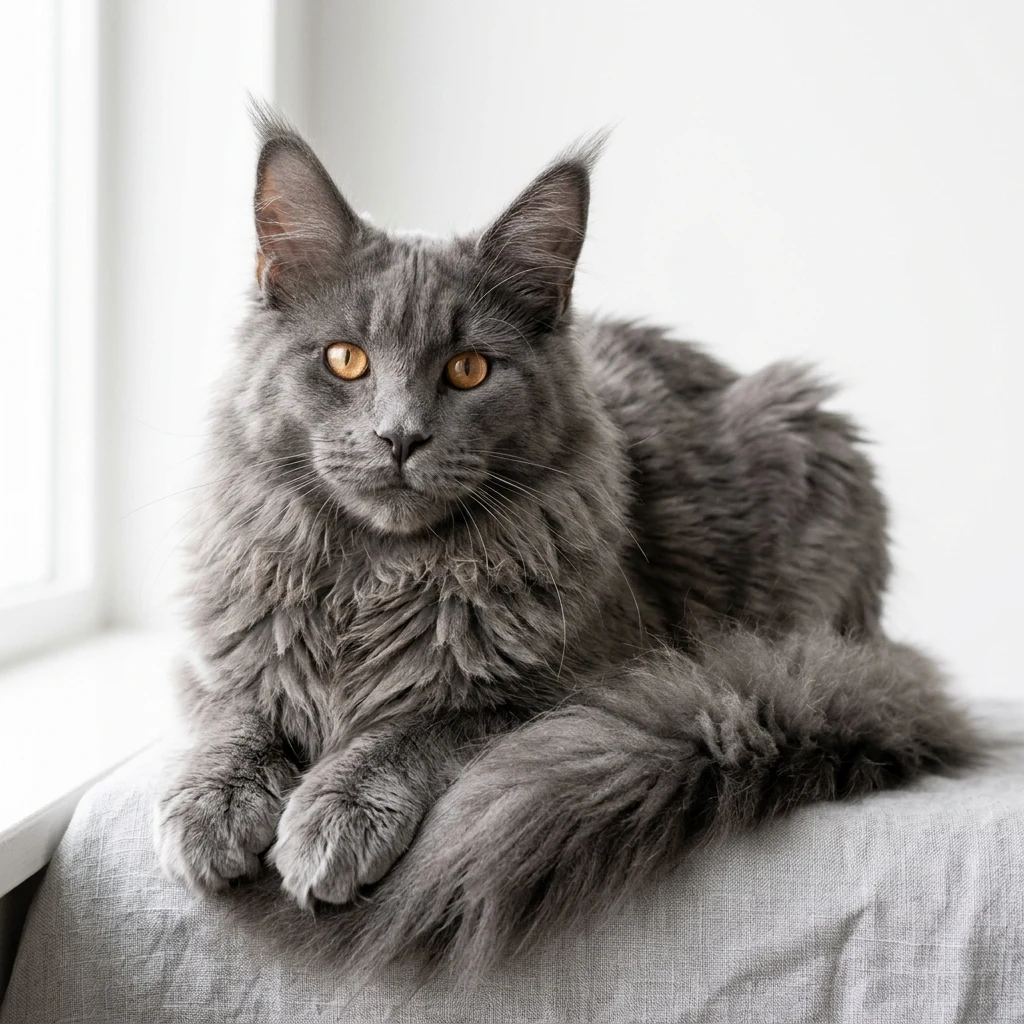
Cat fancy has used “blue” as the formal name for diluted black since the earliest breed standards were written, and it stuck for the same reason “cream” stuck instead of “pale orange” — it reads better on paperwork and sounds sharper from a show-ring announcer. The coat itself is unambiguously grey, sometimes with a faint blue-steel sheen in certain light, which is exactly why so many owners and shelters list the same cat as “grey Maine Coon” instead. Both terms point at the same cat; “blue” is just the term you’ll find on pedigree paperwork and in breed standards.
The Genetics of Dilution
Blue is what happens when black pigment (eumelanin) runs through a dilute gene. The dilute gene spreads pigment granules more thinly and unevenly along the hair shaft, which the eye reads as a lighter, softer, cooler version of the original color. Black diluted becomes blue; red diluted becomes cream. Both parents need to carry a copy of the recessive dilute gene for a kitten to actually show blue, which is why it takes more deliberate pairing to produce than standard black or brown tabby.
Blue Comes in More Than One Pattern
| Variety | What You See |
|---|---|
| Solid blue | Even slate-grey from nose to tail, no visible pattern |
| Blue tabby | Grey base with darker grey-blue swirls or stripes |
| Blue-silver tabby | Blue tabby pattern lightened further by the inhibitor gene |
| Blue-cream | Blue mixed with cream in a soft tortoiseshell-style patchwork — almost always female |
| Blue smoke | Solid blue with a pale undercoat that flashes in motion |
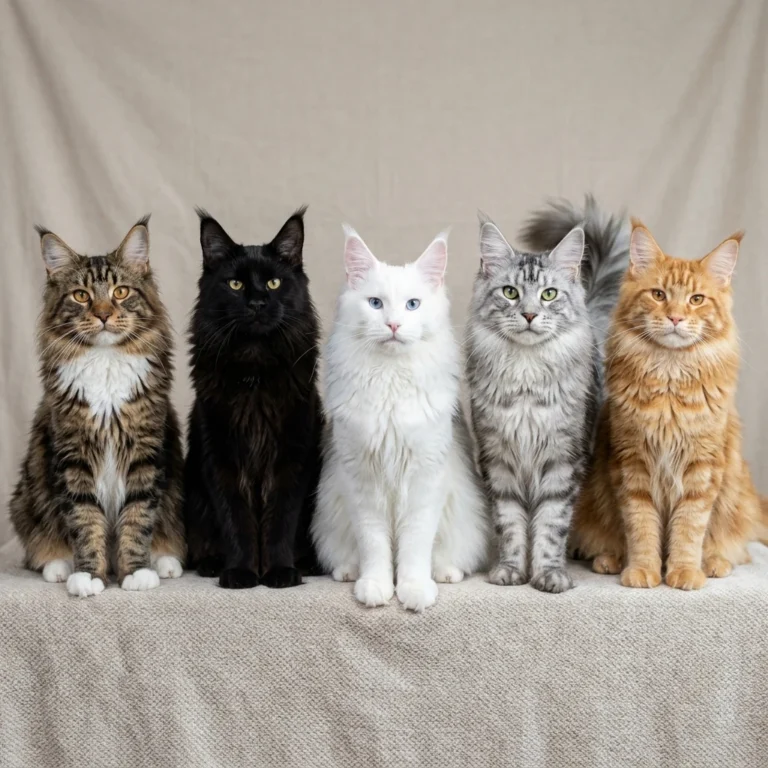
Solid blue is the one most people picture and the one most commonly meant by “grey Maine Coon.” See how blue fits alongside the breed’s other 80-plus colors in our colors guide.
Eye Color and Coat Shade
Green, gold, and copper are the standard eye colors paired with blue coats, and the cool grey fur tends to make green eyes pop especially. Shade of grey varies by individual, from a pale dove-grey to a much deeper charcoal-blue, and coat depth can shift slightly with age and season the way most solid colors do.
How Rare Is a Blue Maine Coon?
Uncommon, not extreme. Blue is a fully recognized standard color, so established breeders can produce it reliably when both parents carry the dilute gene — but because that gene is recessive, it’s far less frequent in general breeding stock than black or brown tabby. Waiting lists for solid blue kittens run longer than for the breed’s most common colors, which pushes both price and patience upward.
Blue Maine Coon Price
Registered, health-tested blue Maine Coon kittens typically run $2,000–$6,000, sitting above the breed’s most common colors and below the very rarest shaded or chinchilla varieties. As with any color, the price should reflect health screening, pedigree, and rearing — not the coat alone. Our price guide covers what actually justifies the number and how to spot inflated “rare color” markups.
Personality and Care
Coat dilution changes fur, not temperament. Blue Maine Coons carry the same gentle, sociable, dog-like personality as the rest of the breed — often described as calm and easygoing enough to suit families, seniors, and multi-pet households alike. Grooming, diet, and health screening follow the standard breed routine covered in our grooming guide and health problems guide.
Frequently Asked Questions
Is a blue Maine Coon actually grey?
Yes, visually. “Blue” is the breed-standard term for diluted black, and the coat itself reads as soft slate grey rather than true blue. “Grey Maine Coon” and “blue Maine Coon” refer to the same cat.
How does a cat become blue instead of black?
Through a recessive dilute gene that spreads black pigment more thinly along the hair shaft. Both parents must carry a copy for a kitten to show the diluted, greyish coat.
How much does a blue Maine Coon cost?
Typically $2,000–$6,000 for a registered, health-tested kitten in 2026, priced above the breed’s most common colors due to the recessive genetics involved.
Are blue Maine Coons rare?
Uncommon rather than extremely rare. It’s a standard recognized color, but the recessive dilute gene means fewer litters produce it compared to black or brown tabby.
What eye color do blue Maine Coons have?
Usually green, gold, or copper. Green is especially striking against the cool grey coat.
Does blue coloring affect a Maine Coon’s personality?
No. Temperament comes from the breed, not the coat. Blue Maine Coons have the same range of personalities as any other color.