Maine Coon Hip Dysplasia: Symptoms, Diagnosis, and Treatment
Cats are notoriously good at hiding pain, and hip dysplasia is exactly the kind of condition that slips by unnoticed for months because of it. There’s no obvious limp the way there often is in dogs — just a cat that quietly stops jumping onto the counter and nobody thinks much of it.
Quick Answer
Hip dysplasia is a malformation of the hip joint where the ball and socket don’t fit together properly, causing grinding, instability, and eventually arthritis. Maine Coons are affected at unusually high rates for a cat breed — studies put it at roughly 25–37% — largely because of their rapid growth and heavy adult size. It can’t be cured, but weight management, pain control, supplements, and in serious cases surgery keep affected cats comfortable and active.
What Hip Dysplasia Actually Is
A normal hip works like a ball sitting snugly in a socket, sliding smoothly with every step. In a dysplastic hip, the ball and socket don’t fit correctly — too shallow a socket, a poorly shaped ball, or both — so instead of sliding, the joint grinds. Over months and years, that grinding wears down cartilage and triggers degenerative arthritis, which is where most of the pain actually comes from.
Why Maine Coons Get It So Often
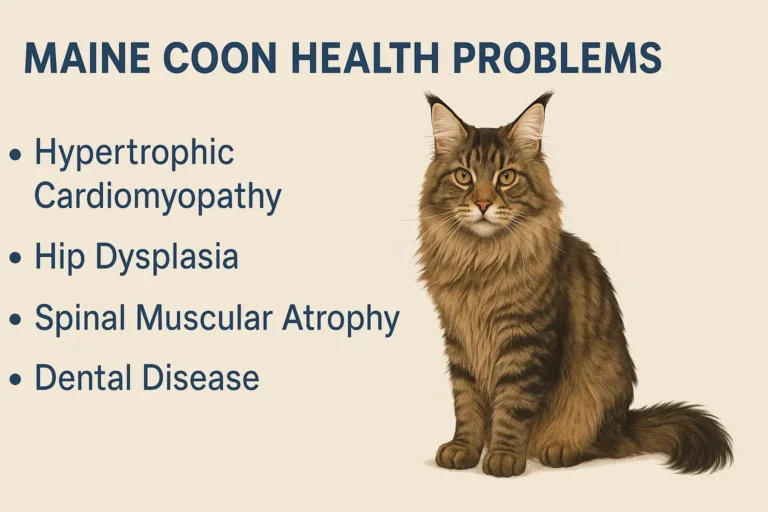
Maine Coons carry one of the highest hip dysplasia rates of any cat breed, with studies putting affected rates between roughly 25% and 37% — a stark contrast to the low single digits typical in the general cat population. Genetics is the primary driver, inherited the same way it is in large dog breeds prone to the condition. Size compounds it: this breed’s rapid growth during the first 8–12 months puts unusual stress on developing joints, and adult weights of 15–25 pounds keep loading a joint that may already be structurally imperfect. Overfeeding during that growth window and general obesity later in life both make existing dysplasia worse, even though neither one causes the underlying joint shape.
Symptoms: Why They’re Easy to Miss
- ✓Reluctance to jump onto counters, beds, or cat trees it used to reach easily
- ✓Taking stairs slowly, or avoiding them altogether
- ✓Hesitating or struggling to squat fully in the litter box
- ✓Accidents outside the litter box tied to squatting discomfort, not behavior
- ✓Excessive licking or chewing around the hip area
- ✓Reduced play, reduced activity generally
- ✓New irritability, grumpiness, or aggression when the hips are touched or handled
None of these scream “hip problem” in isolation, which is exactly why the condition goes undiagnosed for so long in cats. A gradual pattern across several of these is worth a vet visit well before a dramatic limp ever shows up.
How It’s Diagnosed
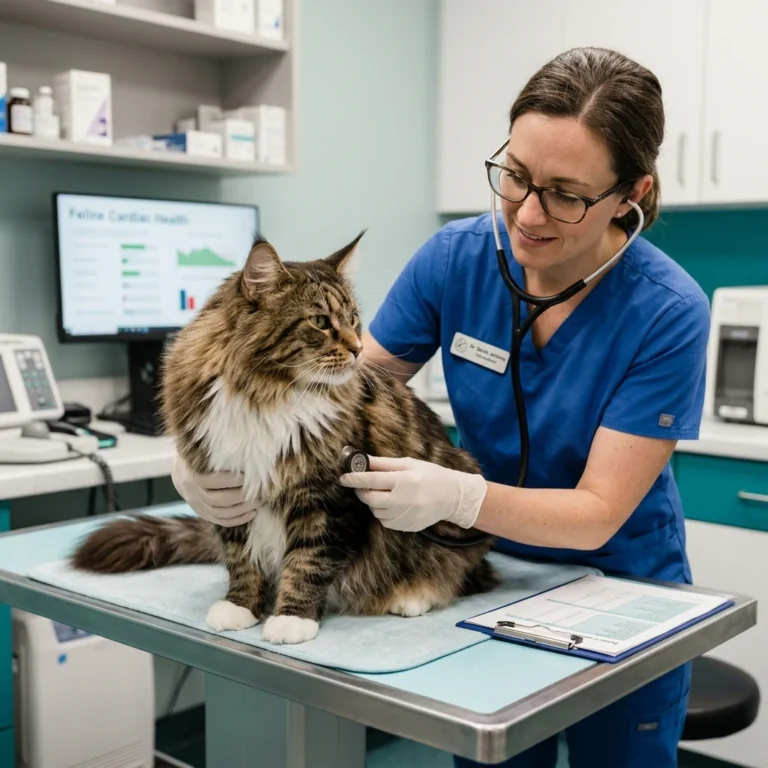
A vet starts with a physical exam and an Ortolani test — manipulating the hip to feel for the looseness characteristic of dysplasia. X-rays confirm it, showing the actual shape and fit of the joint. Breeding cats are often screened through formal hip-scoring programs like OFA (Orthopedic Foundation for Animals) or PennHIP, which grade hip conformation on a standardized scale so breeders can make informed pairing decisions. CT or MRI imaging is available for complex or ambiguous cases but isn’t routine.
Treatment Options
There’s no cure, but there is a genuinely effective management ladder. Weight management is the single most impactful thing an owner can do — every extra pound is extra load on a joint that’s already compromised. Pain relief, prescribed and dosed by a vet (never human NSAIDs, which are toxic to cats), controls day-to-day discomfort. Joint supplements like glucosamine and chondroitin (found in products such as Cosequin or Dasuquin) can slow the progression of arthritic changes, even if they can’t reverse existing damage. Physical therapy — gentle massage, controlled movement, sometimes hydrotherapy — keeps muscles around the joint stronger and more supportive.
Surgery is uncommon in cats but exists for severe cases: a femoral head ostectomy removes the ball of the joint so scar tissue forms a pain-free false joint, and total hip replacement is available at specialty referral centers for cats whose quality of life is seriously impaired.
Can You Prevent It?
Not entirely, since genetics does most of the heavy lifting — but you can meaningfully reduce the odds and the severity. Buy from a breeder who screens breeding cats’ hips (OFA or PennHIP scores, not just a verbal assurance). Keep a growing kitten lean rather than heavy during that critical first year, following the feeding guidance in our diet guide. Encourage moderate, low-impact play over jumping from extreme heights repeatedly, and maintain a healthy adult weight for life. None of this guarantees a dysplasia-free cat, but it stacks the odds meaningfully in your favor.
Frequently Asked Questions
How common is hip dysplasia in Maine Coons?
Studies estimate roughly 25–37% of Maine Coons are affected, one of the highest rates of any cat breed, largely tied to their rapid growth and large adult size.
What are the first signs of hip dysplasia in a cat?
Reluctance to jump to previously easy heights, hesitating on stairs, and difficulty squatting fully in the litter box are usually the earliest, subtlest signs.
Can hip dysplasia in cats be cured?
No, but it can be managed effectively with weight control, vet-prescribed pain relief, joint supplements, physical therapy, and in severe cases surgery.
How is hip dysplasia diagnosed in cats?
Through a physical exam and Ortolani test, confirmed with X-rays. Breeding cats are often formally scored through OFA or PennHIP programs.
Does obesity cause hip dysplasia?
No, the underlying joint malformation is genetic. But excess weight significantly worsens symptoms and speeds up arthritic damage in a cat that already has it.
Should I ask a breeder about hip scores before buying a kitten?
Yes. Reputable breeders screen breeding cats’ hips through OFA or PennHIP and should share those results without hesitation.