Calico Maine Coon: Why Almost None of Them Are Male
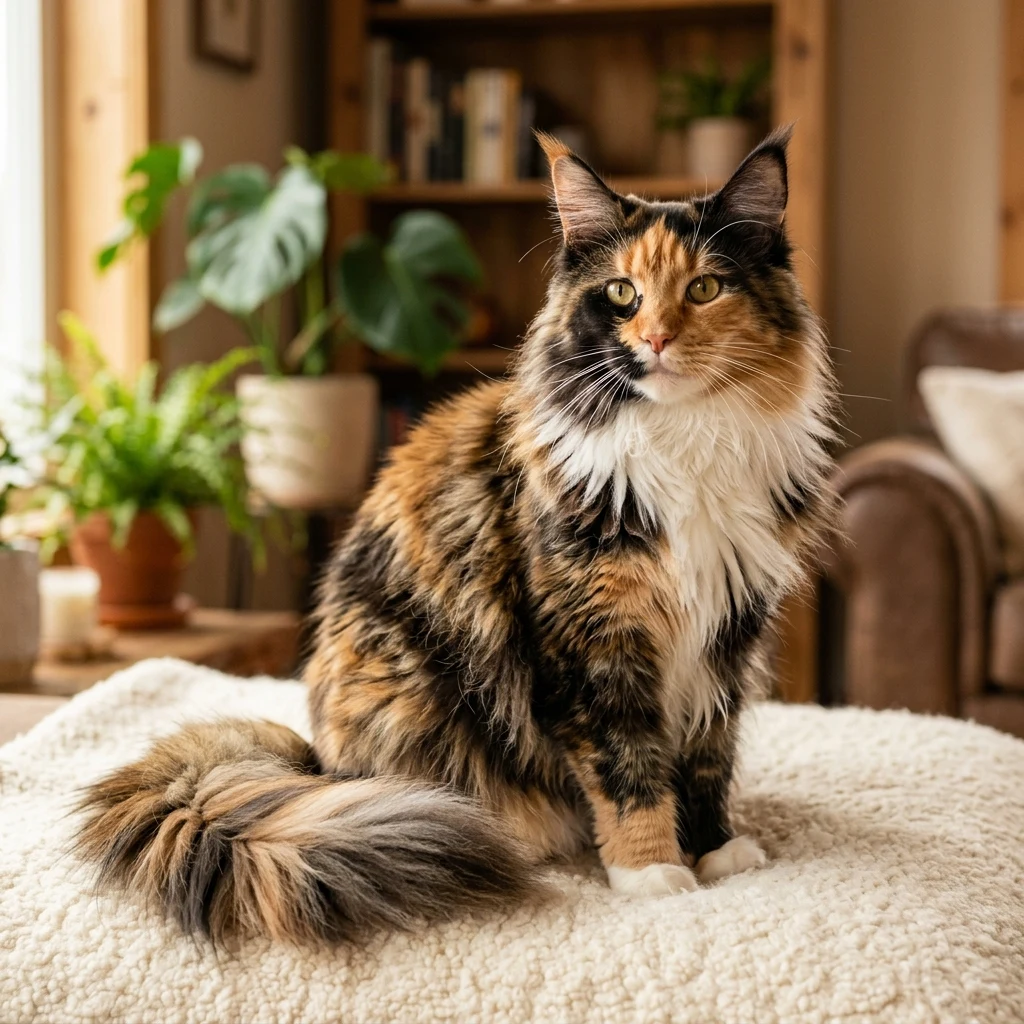
No two calico Maine Coons look alike, and that’s the entire point of the pattern. White, black, and orange land in a different splatter every single time, which means every calico kitten is, in the most literal sense, one of one. It also means this is the color family where genetics gets genuinely interesting — and where a lot of listings get the terminology wrong.
Quick Answer
A calico Maine Coon carries three colors — white, black, and orange (or their diluted versions, blue and cream) — and because the black/orange gene rides on the X chromosome, roughly 99.9% of calicos are female. A male calico requires an extra X chromosome (XXY) and shows up in only about 1 in 3,000 cases, usually infertile. Expect standard Maine Coon pricing, $1,500–$3,500, since calico is a pattern rather than a premium designer color.
How the Calico Pattern Actually Works
Calico needs two things layered together: the black/orange mosaic that also produces tortoiseshell cats, plus the white spotting gene laid on top. Strip the white out and you get a tortoiseshell. Add it back in and the black and orange patches separate into cleaner islands of color surrounded by white — that’s calico.
The X-chromosome mechanics are why the sexes split so unevenly. Black and orange pigment genes both sit on the X chromosome. A cat with two X chromosomes (a normal female) can carry black on one and orange on the other, producing the patchwork. A normal male, with just one X and one Y, can only ever be black or orange, never both — unless a rare chromosomal fluke gives him an extra X.
Why Male Calicos Are So Rare
A male calico carries an XXY chromosome pattern instead of the usual XY, giving him the two X chromosomes needed to display both black and orange. It happens in roughly 1 in 3,000 calico births. Most male calicos are also sterile, a side effect of the same chromosomal anomaly (a condition comparable to Klinefelter syndrome in humans), which makes them a genuine rarity rather than just an unusual color request. If a listing advertises a breeding male calico, that alone is worth double-checking.
Calico Patterns and Look-Alikes
| Term | What It Actually Means |
|---|---|
| Calico | White base with solid black and solid orange patches, no stripes within the patches |
| Dilute calico | Same layout in softer colors — blue instead of black, cream instead of orange |
| Calico tabby (“caliby”) | Calico with tabby striping visible inside the color patches |
| Tortoiseshell | Black and orange mixed together with no white — often confused with calico, genetically a close cousin |
| Van calico | Color mostly limited to the head and tail, rest of the body white |
Tortoiseshell is the mix-up people make most often — the two patterns share the same underlying genetics and differ only in whether the white spotting gene is switched on. See where calico sits among the breed’s other 80-plus color combinations in our Maine Coon colors guide.
Is “Tortitude” Real?
Calico and tortoiseshell cats share a folk reputation for being sassier and more independent-minded than other colors — “tortitude,” as the internet calls it. There’s no controlled research linking coat pattern to personality in cats, and calico Maine Coons carry the same sociable, dog-like temperament as the rest of the breed underneath. The reputation is popular enough that plenty of owners swear by it anyway; take it as folklore with a fan base, not established fact. Full personality breakdown in our personality guide.
Calico Maine Coon Price
Because every calico’s pattern is unpredictable, breeders can’t reliably produce “a calico litter” the way they can plan for a specific solid color, and most don’t charge a premium purely for the pattern. Expect the breed’s standard pet-quality range of $1,500–$3,500, with show-quality lines climbing higher. What actually drives price — health testing, pedigree, breeder reputation — is unchanged from any other color; our price guide covers the full breakdown and scam red flags.
Care
- ✓Grooming and diet are standard-issue — nothing about the calico pattern changes coat maintenance needs. Follow the routine in our grooming guide.
- ✓Size and growth track normally — males typically 15–25 lbs, females 8–15 lbs, full maturity by age 3–5. Details in our size guide.
- ✓Health screening applies as usual — HCM, hip dysplasia, and the rest of the breed’s watch-list are unrelated to coat pattern. See our health problems guide.
Frequently Asked Questions
Are calico Maine Coons rare?
The pattern itself isn’t rare in the wider cat population, but a true male calico is — only about 1 in 3,000 calico cats is male, and most of those are sterile.
Why are almost all calico cats female?
Because the black and orange color genes both sit on the X chromosome. Females have two X chromosomes and can carry both colors; males normally have only one X, so they can’t display the mix unless a rare chromosomal variation gives them an extra one.
What’s the difference between calico and tortoiseshell Maine Coons?
Genetically they’re close cousins. Tortoiseshell mixes black and orange with no white. Calico adds the white spotting gene, which separates the colors into cleaner patches on a white base.
How much does a calico Maine Coon cost?
Typically $1,500–$3,500 from a reputable breeder — the same standard range as other colors, since calico is an unpredictable pattern rather than something breeders can guarantee or charge a premium for.
Are male calico cats always sterile?
Not always, but usually. The extra X chromosome that lets a male display calico coloring is typically linked to reduced fertility, similar to Klinefelter syndrome in humans.