Maine Coon Chirping and Trilling Explained
The first time a Maine Coon greets you with a little bird-like chirp instead of a meow, it stops you mid-step. It doesn’t sound like a cat noise at all — more like something that should be perched on a windowsill. Once you know what it means, though, you start hearing it as exactly what it is: this breed talking to you constantly, in a language most cats don’t bother using.
Quick Answer
Maine Coons chirp and trill instead of relying on a standard meow because both sounds trace back to kittenhood — mother cats use short chirps and rolling trills to get kittens’ attention and lead them somewhere. Adult Maine Coons keep using those “nursery” sounds with their owners as a greeting, an attention-getter, or a “follow me, I want to show you something.” It’s one of the most recognizable traits of the breed and, in almost every case, nothing to worry about.
Chirp vs Trill: What’s the Difference?
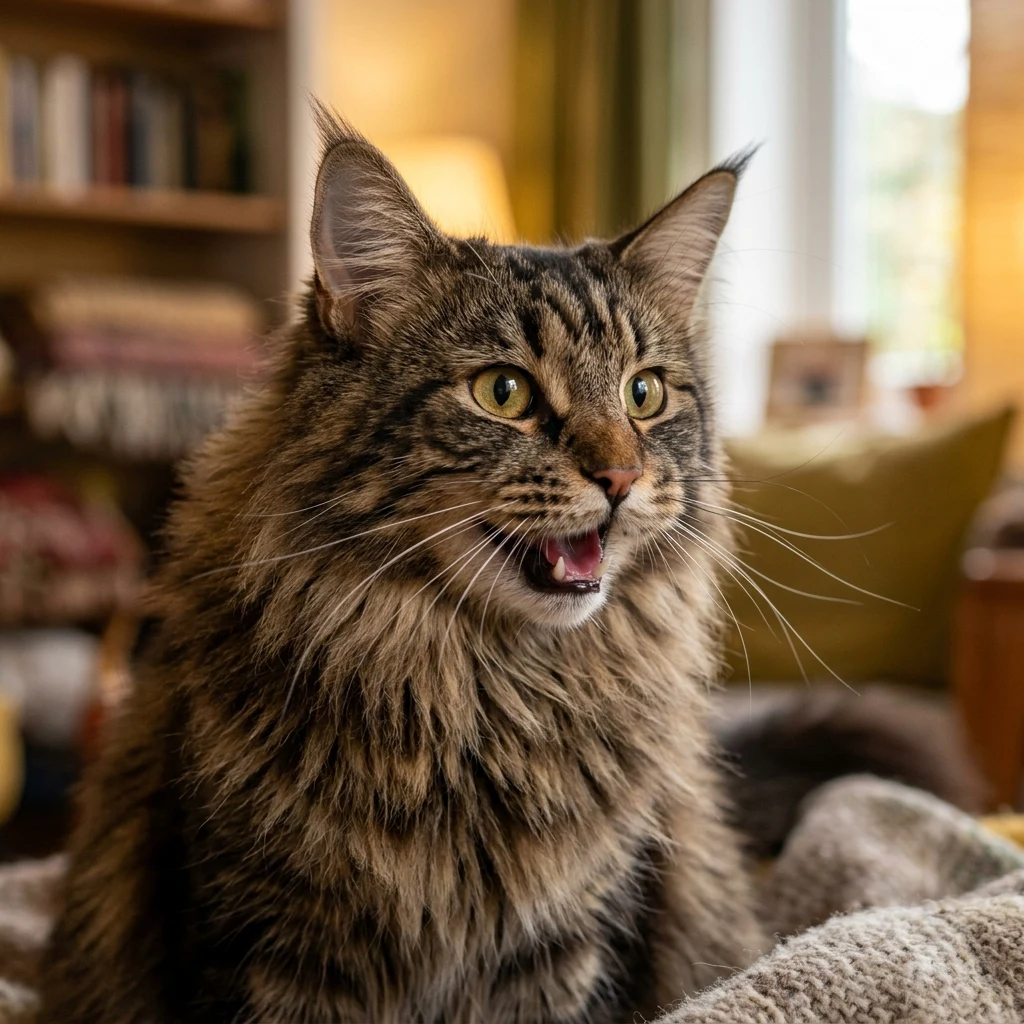
A chirp is short, high-pitched, and bird-like — a single quick burst, often triggered by something the cat finds genuinely exciting: a bird outside the window, a toy, sudden movement. It reads as a little exclamation point.
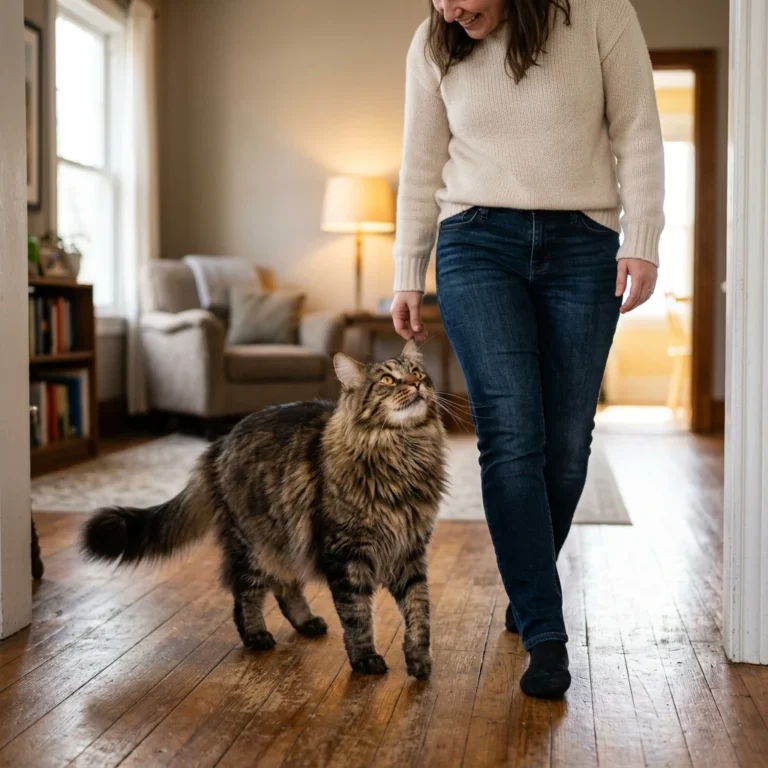
A trill is longer and more musical, made with the mouth mostly closed, rolling somewhere between a meow and a purr. It functions more like a spoken greeting — the sound a Maine Coon makes walking up to you, or right before it turns and heads toward the kitchen expecting you to follow.
Why It Starts With Mother Cats
Chirping and trilling aren’t unique to Maine Coons genetically — most cats are capable of both sounds. What’s different is how often this breed keeps using them into adulthood. Mother cats chirp and trill at newborn kittens to get their attention or guide them somewhere specific, a soft, low-stakes communication tool long before kittens can understand words or body language fully. Maine Coons, being an unusually social and people-oriented breed, seem to carry that “nursery vocabulary” forward and redirect it at their owners instead of littermates — which is part of why the sound reads as so affectionate.
What Your Maine Coon Is Actually Saying
| Situation | Likely Meaning |
|---|---|
| Chirps at you when you walk in the door | A greeting — the feline equivalent of “you’re home!” |
| Trills, then walks toward the kitchen | “Follow me” — usually means the food bowl or water fountain |
| Chirps rapidly at a bird or squirrel outside | Excitement or hunting instinct triggered by prey it can’t reach |
| Trills softly while being petted | Contentment, a relaxed social sound similar to purring |
| Chirps at a toy right before pouncing | Play-hunting excitement |
What About Chattering, Yowling, and Other Sounds?
Chirp and trill are the two sounds most associated with this breed, but Maine Coons have a wider vocabulary worth knowing briefly. Chattering — that fast jaw-clicking sound made watching birds through a window — is a separate hunting-frustration behavior, not related to chirping. Yowling, a longer and more insistent cry, usually signals something more urgent: hunger, discomfort, disorientation at night, or in unneutered cats, mating behavior. Hissing is a clear boundary signal — fear or discomfort, not aggression for its own sake. None of these overlap much with the friendly, conversational chirp-and-trill vocabulary covered above; if you’re dealing with sudden yowling or other troubling sounds specifically, our behavior problems guide covers those in depth.
When Vocalization Signals a Problem
Chirping and trilling themselves are never a health concern — they’re a normal, happy part of this breed’s communication style. Pay attention instead if the overall pattern changes: a normally chatty cat goes suddenly silent, a quiet cat starts yowling persistently (especially at night), or any vocalization pairs with hiding, breathing changes, appetite loss, or apparent pain. Those shifts are worth a vet visit; a cat that just keeps chirping at you the way it always has is simply being a Maine Coon.
Frequently Asked Questions
Why do Maine Coons chirp instead of meow?
Chirping and trilling trace back to kitten-and-mother communication. Maine Coons, being especially social, carry those sounds into adulthood and use them with their owners as greetings, attention-getters, and “follow me” cues.
What does it mean when a Maine Coon trills at you?
Usually a friendly greeting or an invitation to follow — often right before the cat walks toward its food bowl, a door, or something it wants to show you.
Is chirping a sign of a happy cat?
Generally yes. Chirping and trilling are typically positive, social sounds tied to excitement, curiosity, or contentment, not distress.
Do all Maine Coons chirp, or just some?
Most do, to varying degrees — it’s a strong breed tendency, though individual cats vary in how vocal they are overall, the same way people vary in how talkative they are.
What’s the difference between a chirp and a chatter?
A chirp is a short, friendly, bird-like sound used socially. Chattering is a fast jaw-clicking noise made while watching prey through glass, tied to hunting frustration rather than social communication.
Should I worry if my Maine Coon suddenly stops chirping?
A noticeable, lasting change in a cat’s normal vocal habits — going quiet, or the opposite, becoming unusually loud — is worth mentioning to a vet, especially alongside other changes like appetite or energy.